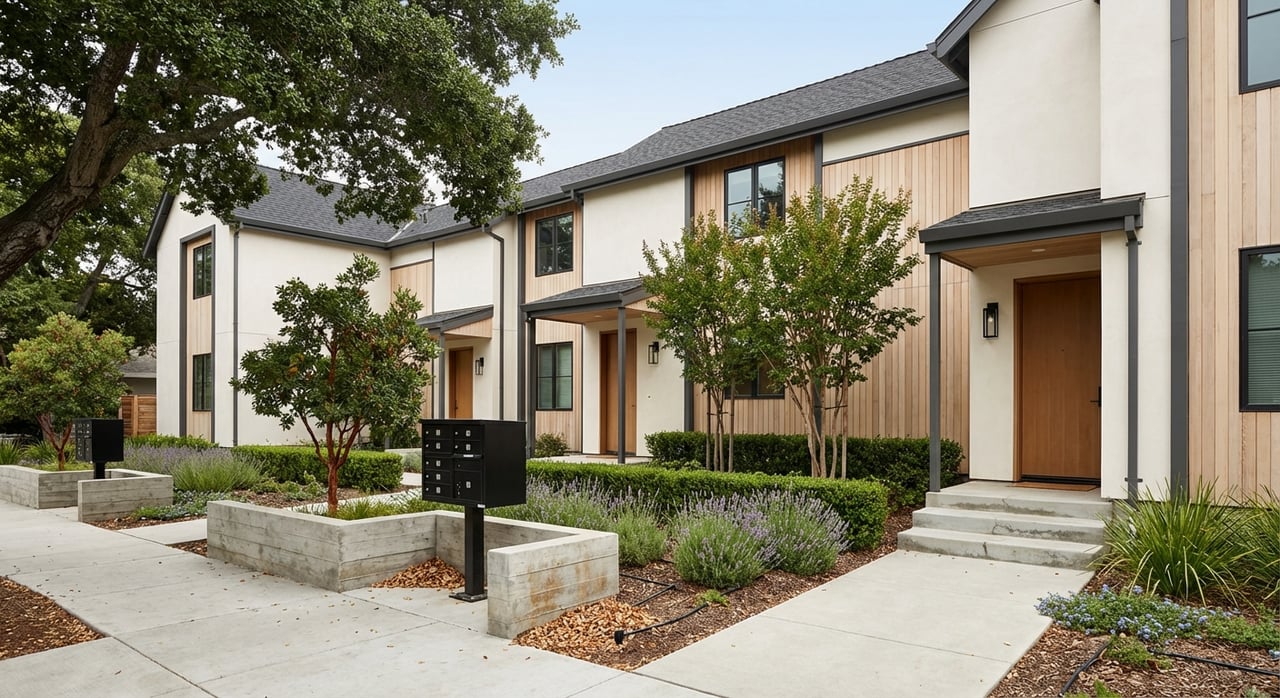
Eyeing a Mountain View condo or townhome so you can be close to Castro Street, Caltrain, or the tech campuses without the upkeep of a single-family home? You are not alone. The attached-home market offers a relative entry point, lower exterior maintenance, and walkable locations, but it also comes with HOA rules, documents, and financing checks that matter to your bottom line. In this guide, you’ll learn where to look, how HOA disclosures work in California, what lenders and insurers will review, and a step-by-step buyer checklist. Let’s dive in.
Why choose a condo or townhome here
Mountain View remains a high-cost market, though it has softened from peak pricing. The citywide median sale price was about $1.66 million in January 2026 (Redfin). Condos and townhomes generally trade below single-family homes, with many 2024–2025 sales in roughly the $1.15 million to $1.5 million range, and some one-bedroom condos often listed under $1 million depending on building, size, and location (Redfin market and listing data). Many single-family neighborhoods sit above $2 million, so attached homes can offer a more attainable path.
Beyond price, you gain convenience. Downtown and transit-adjacent buildings put you near restaurants, the Transit Center, and corporate shuttles. You also offload roof, exterior, and common-area maintenance to the association. The tradeoff is monthly HOA dues, building rules, and usually less private outdoor space.
Typical sizes are practical for many buyers. One-bedroom condos often run about 600 to 900 square feet, two-bedroom condos around 900 to 1,300 square feet, and many townhomes 1,200 to 1,800 square feet or more with attached garages. Exact sizes vary by community, so confirm with active listings when you target a neighborhood.
Where to look in Mountain View
Downtown and Old Mountain View
If you want walkability and transit, start here. You can be steps from Castro Street dining and the Mountain View Transit Center for Caltrain, VTA, and shuttles. The city’s overview of the area helps you understand commuting options at the Mountain View Transportation page. Expect mid-rise or mixed-use buildings, modern amenities, and higher HOA dues in elevator or garage buildings. Outdoor space is more limited, but convenience is the draw.
Monta Loma and nearby pockets
Monta Loma is known for its mid-century single-family character. Attached-home options are more common in surrounding pockets rather than within the core tract. You will find lower-rise condo clusters and townhome communities with access to San Antonio Center and El Camino. For neighborhood context and history, see the Monta Loma neighborhood association. This area appeals if you like a calmer residential feel with quick shopping and commute routes.
North Bayshore: future inventory to watch
North Bayshore is a long-term planning area near major tech campuses. The city has approved a significant transformation that will bring thousands of new homes over time, largely in mid to high-rise formats. If you prioritize new construction and proximity to Google nodes, keep an eye on the North Bayshore plan. Most changes will roll out over multiple years, so timing and release phases matter.
Whisman, San Antonio, and Shoreline West
These subareas mix older condominium complexes, newer infill, and multi-level townhomes. Whisman and East Whisman are popular with commuters for proximity to freeways and light rail. The San Antonio area blends condos over retail and newer townhomes near the Caltrain station and shopping. Shoreline West sits near Castro Street’s edge with bike-friendly routes and smaller communities.
Quick neighborhood snapshot
| Neighborhood | Typical unit type | Nearest transit/amenity |
|---|---|---|
| Downtown / Old Mountain View | Mid-rise condos, some townhomes | Mountain View Transit Center (Caltrain, VTA), Castro St dining |
| Whisman / East Whisman | 2–3 level townhomes, condo-townhome hybrids | VTA Light Rail, Shoreline Blvd, Hwy 101/85 |
| San Antonio Area | Condos over retail, newer townhomes | San Antonio Caltrain, shopping/dining |
| Shoreline West / Castro-edge | Low-rise condos, small townhome HOAs | Castro St restaurants, bike routes |
| Monta Loma-adjacent pockets | Older condo clusters, small townhome HOAs | El Camino Real, San Antonio Center |
HOA basics you must know
California law sets clear rules for what you should receive in an HOA resale package. Under the Davis-Stirling Common Interest Development Act, sellers must provide association documents to prospective buyers. Civil Code Section 4525 requires items like governing documents, financials, and reserve information be delivered “as soon as practicable.” You can review the statute at Civil Code Section 4525.
Here is what you typically receive during escrow:
- CC&Rs, bylaws, and rules and regulations.
- Current operating budget, financial statements, and the reserve study or reserve summary.
- An insurance summary or declaration page for the master policy.
- An estoppel or assessment statement showing dues, special assessments, and any delinquencies.
- Recent meeting minutes and any disclosed litigation.
A new law effective January 1, 2026, adds a critical disclosure. SB 410 requires that the most recent inspection report for exterior elevated elements such as balconies, decks, and exterior stairs managed by the HOA be included in the resale package. This builds on prior inspection requirements and is especially important in older buildings where remedial work may be planned.
HOA dues in Mountain View vary by building and amenities. Older walk-up complexes with fewer amenities often have lower dues, while elevator buildings with parking garages, pools, or fitness rooms tend to be higher. Many listings in late 2025 and early 2026 show dues in the $300 to $600-plus per month range. Your lender will include dues in your debt-to-income calculation, so budget accordingly.
When you review the documents, focus on reserves, planned projects, and insurance. A healthy reserve plan helps prevent frequent special assessments. Red flags include a missing reserve study, low reserve funding, substantial litigation, or high owner delinquency rates. Ask whether any assessments are already approved or anticipated and how payments will be structured.
Financing and insurance checkpoints
Financing for condos and townhomes depends on both your profile and the building’s eligibility. FHA and VA loans use project approval criteria for items like owner-occupancy levels, commercial-use limits, delinquencies, and reserves. If you plan to use these programs, confirm the building’s status early and ask about single-unit approvals when available. For an overview of approval basics and spot approvals, read this guide to FHA-approved condos.
Insurance is another key review area. The association maintains a master policy that covers the structure and common elements. You will carry an HO-6 unit-owner policy for interior finishes, personal property, liability, and often loss-assessment coverage. Master policies vary by scope, commonly described as bare walls, walls-in, single-entity, or all-in. Your HO-6 limits should be set after you confirm what the master policy covers. For a deeper look at master policy types, see the community association insurance manual, and for unit-owner coverage basics, review HO-6 insurance.
Lenders also consider the master policy’s deductible. Very large deductibles can increase the risk that owners will face assessments after a claim. Program materials and underwriting guides often reference deductible thresholds. During escrow, request the declaration page and confirm limits and deductibles. You can see representative guidance in a conventional lending guide.
Inspections that matter in condos and townhomes
Order a standard home inspection for the unit that covers systems like HVAC, plumbing, and electrical. Because the building exterior and common areas are shared, ask for building-level information too. Focus on roofs, foundations, exterior cladding, elevators, and fire-life safety systems. If the building has balconies, decks, or exterior stairs, review the current inspection reports associated with SB 326/5551 and confirm the most recent report is included as required by SB 410. If repairs were recently completed, request the engineer’s final sign-off.
Your Mountain View buyer checklist
Use this practical checklist to keep your escrow on track.
Request these documents early
- Governing documents: CC&Rs, bylaws, and rules and regulations. See Civil Code Section 4525.
- Financials: current operating budget, year-to-date financials, and the most recent reserve study or summary.
- Insurance: master policy declarations, noting coverages and deductibles; confirm if earthquake or flood are included or excluded. See the community association insurance manual.
- Estoppel or fee statement: current dues, assessments, and any delinquencies.
- Minutes and litigation: board or membership minutes for the last 12 months when available, and any litigation or settlement summaries.
- Exterior elevated elements: the latest inspection report for balconies, decks, or stairs as required by SB 410.
Ask the HOA or manager
- What is the current reserve balance and percent funded relative to the reserve study recommendation?
- Are any special assessments approved or anticipated in the next 12 to 24 months? If yes, what is the scope, estimated cost, and payment schedule?
- Are there any construction-defect settlements or major litigation? Can you provide summaries?
- What does the master insurance policy cover and what is the per-occurrence deductible? Who pays the deductible after a claim?
- Is the project approved for FHA or VA financing? What are the current owner-occupancy and delinquency rates? See FHA approval basics.
- Are there rental or short-term rental restrictions that would affect future use?
Timing and contingencies
- Civil Code Section 4525 requires the disclosure package be provided as soon as practicable. Associations also have typical turnaround windows once requested. Build enough time into your HOA-review contingency for you and your lender to evaluate the documents. Review the statute at Civil Code Section 4525.
- Keep an HOA-document review contingency to confirm insurance scope, reserve health, and planned assessments before you release contingencies.
- If large capital work is planned, consider negotiating an escrow holdback or a seller credit toward an imminent assessment.
- Confirm FHA, VA, or other project approvals early if your financing depends on them. If the project is not approved, ask your lender about conventional options or single-unit approvals where available.
Commute, lifestyle, and Peninsula context
Downtown’s Transit Center links Caltrain, VTA, and shuttle networks that serve many tech employers, which is why walkable condos are so popular. You can review routes and options on the city’s transportation page. Bikeable paths like the Stevens Creek and Permanente trails add car-light options for daily life.
When you compare nearby cities, remember each tradeoff. Palo Alto often costs more for similar proximity to transit and downtown amenities. Redwood City is frequently seen as a slightly more affordable Peninsula alternative with its own revitalized core. Menlo Park offers a range of products and commute options. Always compare like-for-like listings and current medians by city and date before deciding where your budget stretches best.
Work with a calm, local advocate
Buying a condo or townhome here is a paperwork-heavy process that rewards careful review. You will balance neighborhood fit, dues, reserves, and lending requirements alongside your lifestyle goals. An experienced local agent can help you compare buildings, read the HOA package, surface red flags early, and negotiate credits or timing when capital projects are coming.
If you are considering a Mountain View condo or townhome, let’s talk through your timeline, financing, and the communities that best match how you live. Schedule a conversation with Lynne Mercer to get started.
FAQs
What are typical HOA dues for Mountain View condos?
- Many listings in late 2025 and early 2026 show dues in the $300 to $600-plus per month range, depending on amenities and building type.
How do condo prices compare to single-family homes in Mountain View?
- Condos and townhomes often sell for less, with many 2024–2025 sales around $1.15 million to $1.5 million, while single-family homes in many areas exceed $2 million (context from Redfin market data).
What HOA documents will I receive when buying in California?
- Expect CC&Rs, bylaws, rules, budgets, financials, reserve study, insurance declarations, estoppel statements, minutes, and required inspection reports under Civil Code Section 4525.
Do I need special inspections for balconies or decks in a condo building?
- Yes; review the most recent exterior elevated elements inspection report, which must be included in the resale package under SB 410.
Can I use an FHA or VA loan to buy a Mountain View condo?
- Possibly; it depends on project approval and eligibility, so verify status early and ask about single-unit approvals; see FHA-approved condo basics.
What insurance do I need as a condo owner?
- The HOA carries a master policy; you will carry an HO-6 policy for interiors, personal property, liability, and loss assessment, sized to the master policy’s coverage and deductibles.