If you are trying to choose between North and South Palo Alto, you are not just picking a point on a map. You are deciding what kind of daily life, housing style, and neighborhood setting fits you best. The good news is that the choice is usually less about one side being better and more about understanding the tradeoffs. Let’s dive in.
How buyers define North and South Palo Alto
Palo Alto does not have one official north versus south real estate line that everyone uses. In practice, many buyers and locals treat the area south of Oregon Expressway and Page Mill Road as South Palo Alto, while the older historic core sits north of that general divide.
That practical split matters because it helps explain why each side feels different. North and north-central Palo Alto tend to reflect the city’s older development pattern, while South Palo Alto is more tied to postwar neighborhoods and later subdivision growth.
North Palo Alto at a glance
North Palo Alto often attracts buyers who want closer access to the city’s most urban amenities. Searches on this side commonly start with areas such as Downtown North, University South, Old Palo Alto, Crescent Park, and Duveneck-St. Francis.
The north and north-central parts of the city also hold much of Palo Alto’s older historic fabric. That can translate into more architectural variety, more established streetscapes, and in some cases more review requirements if you plan to make exterior changes.
What the housing stock feels like
In the older core, you are more likely to see a wide mix of architectural styles. City historic surveys note styles such as Craftsman, Mission Revival, Spanish Colonial Revival, Prairie, Queen Anne, and Streamline Modern.
For a buyer, that often means more one-of-a-kind homes and more variation from block to block. It can also mean older systems, remodeling considerations, and a need to understand whether a property sits in a historic district or appears on the Historic Inventory.
What daily life feels like
Downtown Palo Alto is one of the strongest anchors on the north side. The City describes it as a destination for restaurants, coffee shops, theaters, art galleries, and locally owned retail, with University Avenue as the focal point for shopping, dining, and entertainment.
This side also benefits from easy access to the Palo Alto Transit Center, which is a major mobility hub served by five transit providers. If you want a shorter walk to downtown activity or a more urban streetscape, north and north-central neighborhoods often rise to the top.
South Palo Alto at a glance
South Palo Alto usually appeals to buyers who want a more neighborhood-oriented setting. Common search areas include Midtown, South of Midtown, Barron Park, Charleston Meadow, and Greenmeadow.
This side of the city is more closely associated with postwar development patterns. Instead of the pre-1940 architectural mix that often defines the north core, you are more likely to find mid-century ranch homes, Eichler-era design, and later subdivision layouts.
What the housing stock feels like
South Palo Alto includes many neighborhoods shaped by postwar planning. The City’s design work identifies 31 single-family Eichler tracts, and local historic references also point to Greenmeadow and Green Gables as notable areas.
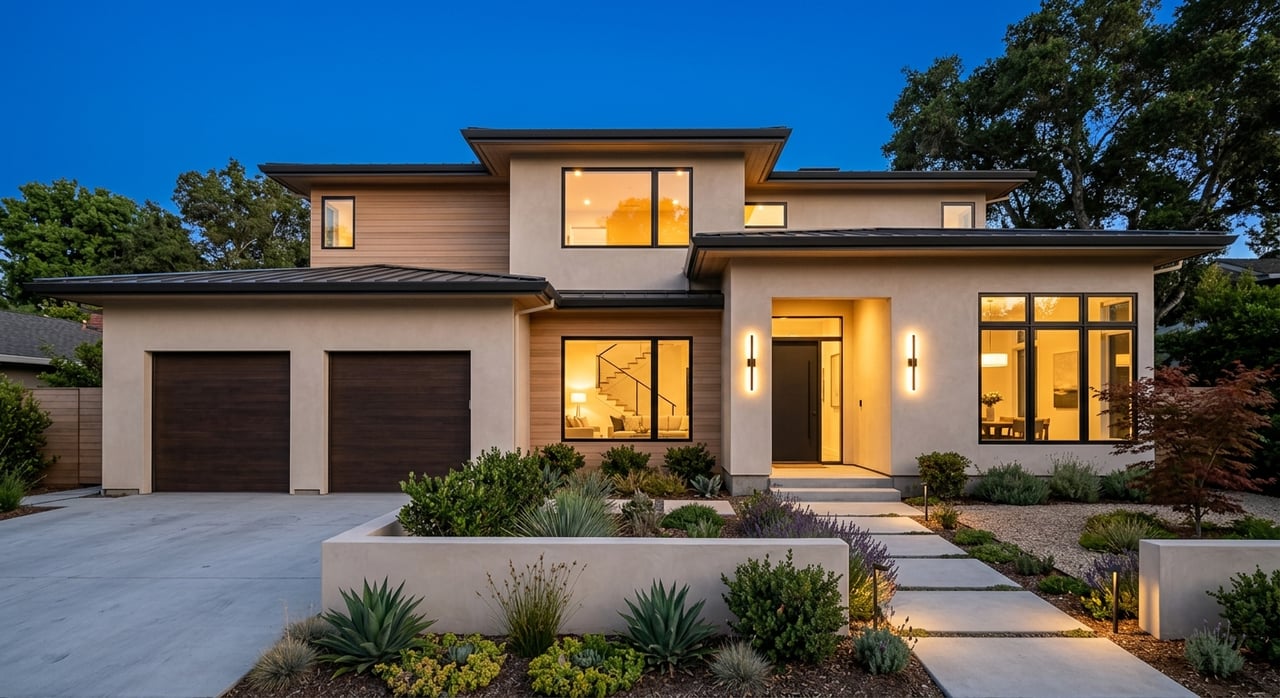
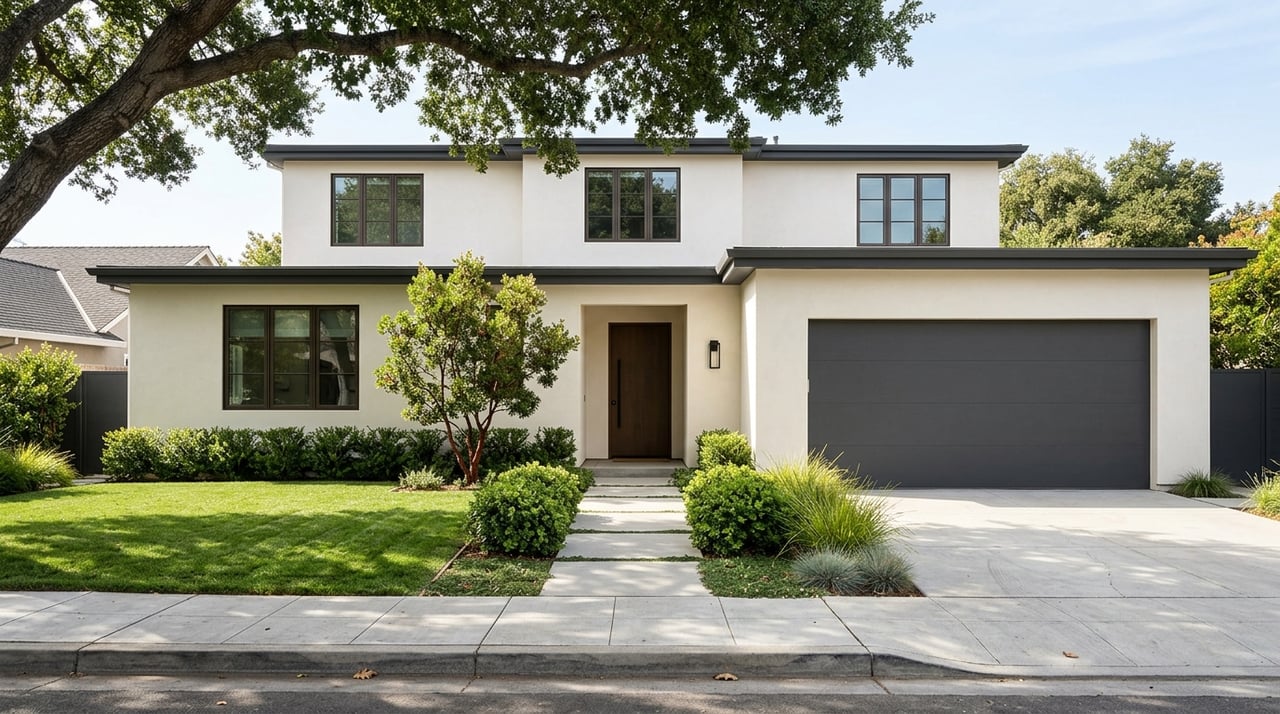
For buyers, that can mean cleaner rooflines, more consistent streetscapes, and a different relationship between house, lot, and garage than you often find in older north-side neighborhoods. If you like mid-century design or tract-based neighborhood layouts, the south side may feel like a better fit.
What daily life feels like
California Avenue is a major anchor for South Palo Alto. The City describes it as being in the heart of Palo Alto, with boutiques, casual and upscale restaurants, a year-round farmers’ market, and public art.
South Palo Alto also feels more park-oriented and residential in many areas. Community spaces such as Cubberley Community Center, Greer Park, Boulware Park, and Mitchell Park help shape the area’s day-to-day rhythm.
Price differences are not that simple
One of the biggest mistakes buyers make is assuming North Palo Alto always costs more and South Palo Alto always costs less. Current market snapshots show a much more nuanced picture.
Citywide, Palo Alto’s median sale price was about $3.6 million over the three months ending in May 2026, with homes selling in about 12 days. That tells you the market remains competitive across the city.
North-side price range
Some north-side neighborhoods sit at the very top of the market. Old Palo Alto posted a median sale price of about $9.1 million, and Crescent Park was about $5.8 million.
At the same time, Downtown North was much lower at about $2.2 million. That is a helpful reminder that the north side includes both ultra-high-end single-family neighborhoods and more attainable condo- or townhome-oriented pockets.
South-side price range
South Palo Alto also spans a wide pricing band. Midtown was about $3.1 million, South of Midtown about $3.8 million, Barron Park about $4.0 million, Charleston Meadow about $2.7 million, and Greenmeadow about $3.5 million.
In other words, South Palo Alto is not a bargain bucket. It is a mixed market with meaningful variation depending on the neighborhood, housing type, lot, condition, and location.
Convenience depends on your routine
The better question is not which side is more convenient in general. It is which side makes your routine easier.
If you want frequent access to downtown dining, the transit center, and a denser retail core, north and north-central Palo Alto may check more boxes. If you prefer California Avenue, neighborhood-scale errands, and a more suburban street pattern, South Palo Alto may feel more natural.
Transit and connectivity
North Palo Alto has the advantage of proximity to the Palo Alto Transit Center and the downtown core. That can matter if rail access or a more connected street grid is high on your list.
South Palo Alto is also connected to major corridors including US 101, El Camino Real, and Caltrain. Still, the City’s planning work notes that the rail corridor creates an east-west barrier in some areas, so buyers should pay close attention to crossing patterns, especially if they plan to bike or walk regularly.
Historic character versus postwar patterns
A big part of this decision comes down to the kind of home and streetscape you want to live in. North Palo Alto tends to offer stronger historic character and more architectural diversity, while South Palo Alto tends to offer more postwar neighborhood consistency.
Neither is inherently better. Some buyers love the charm and individuality of older homes, while others prefer the simpler lines and more predictable layout patterns often found in postwar neighborhoods.
Remodeling considerations
If you are considering a fixer or planning future updates, this difference matters. Older north-side homes may have more preservation sensitivity, and properties in historic districts or on the Historic Inventory can require review for many exterior projects.
That does not mean you should avoid them. It simply means you should go in with clear expectations and understand the approval path before you buy.
Neighborhood feel and local anchors
North and north-central Palo Alto often read as a compact urban village. Along with University Avenue, civic and park anchors such as Rinconada Park, Lucie Stern Community Center, and the Junior Museum and Zoo help define the area.
South Palo Alto feels more residential and park-oriented in many spots. Places like Cubberley, Greer Park, Boulware Park, Mitchell Park, and California Avenue create a different kind of neighborhood rhythm, one that many buyers find calmer and more locally focused.
What this means for your home search
When you compare North and South Palo Alto, try not to reduce the search to one broad label. The more useful approach is to match your budget, design preferences, daily routine, and long-term plans to specific neighborhoods.
A buyer who wants historic architecture, downtown proximity, and transit access may naturally lean north. A buyer who wants mid-century housing, more park-centered surroundings, or a neighborhood-scale commercial district may feel more at home in the south.
The strongest strategy is to compare actual neighborhoods side by side. That is where local insight makes a real difference, especially in a city where price points, housing stock, and convenience can vary so much within a few miles.
If you want help narrowing your options in Palo Alto, working with an agent who knows the city block by block can save you time and help you focus on the neighborhoods that truly fit your goals. To start that conversation, connect with Lynne Mercer.
FAQs
How is North Palo Alto different from South Palo Alto for buyers?
- North Palo Alto generally offers older housing stock, more historic character, and easier proximity to downtown and the transit center, while South Palo Alto is more associated with postwar neighborhoods, California Avenue, and a more park-oriented residential feel.
Is North Palo Alto always more expensive than South Palo Alto?
- No. While neighborhoods like Old Palo Alto and Crescent Park rank among the city’s highest-priced areas, Downtown North is much lower, and several South Palo Alto neighborhoods overlap with or exceed other north-side areas depending on housing type and location.
What kinds of homes are more common in South Palo Alto?
- Buyers in South Palo Alto are more likely to encounter mid-century ranch homes, Eichler-era design, and later subdivision patterns rather than the broader pre-1940 architectural mix common in the older north core.
Is South Palo Alto less convenient than North Palo Alto?
- Not necessarily. South Palo Alto has strong local amenities centered around California Avenue and good access to major corridors, though buyers should pay attention to east-west rail crossings and local connectivity patterns.
Should buyers worry about remodeling older homes in North Palo Alto?
- Sometimes. Homes in historic districts or on the Historic Inventory can require review for many exterior projects, so it is smart to understand those rules before you commit to a purchase.
Which Palo Alto side is better for a neighborhood-by-neighborhood search?
- Both. The best approach is to compare specific neighborhoods such as Old Palo Alto, Crescent Park, Midtown, Barron Park, Charleston Meadow, or Greenmeadow based on your budget, housing preferences, and daily routine rather than relying on a simple north-versus-south assumption.